General Liability
Covers third-party injuries or property damage arising from your work.
Learn more
In many gigs, clients require proof of liability coverage before signing. It’s the baseline protection for everyday project activity.
If you’re just starting out, the decision to insure your freelance work can feel overwhelming. This guide walks you through when insurance makes sense, what coverage you actually need, and how to budget for it—without the jargon. Think of it as a practical bridge from “I’m starting” to “I’m protected.”
Insurance isn’t a “nice-to-have” for most freelancers once you start earning money. It’s a safety net that helps you protect clients, your equipment, and your livelihood when the unexpected happens. Below are the real-world reasons that often justify coverage early on.
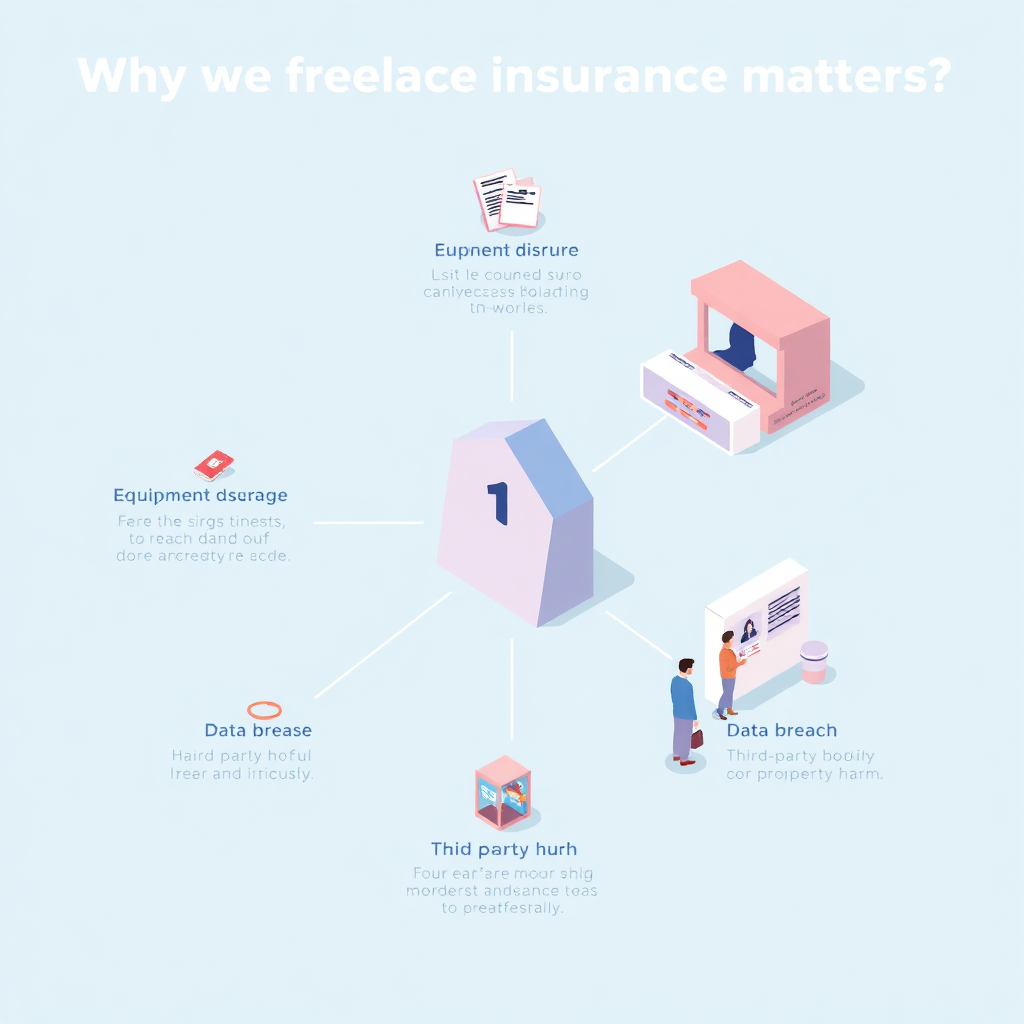
Insurance isn’t only for seasoned operators. The right timing depends on your risk exposure, client expectations, and how you run your business. Here’s a practical progression that many new freelancers find helpful.
Your first paid project increases risk exposure. Consider liability coverage if you’ll bill for it.
You keep client data or equipment at hand; this is a good moment to explore cyber and equipment coverage.
Portfolio grows; your risk footprint expands. Consider a broader liability package and a simple cyber add-on.
Covers third-party injuries or property damage arising from your work.
In many gigs, clients require proof of liability coverage before signing. It’s the baseline protection for everyday project activity.
Coverage for errors, omissions, and professional negligence in your advice or services.
Especially relevant for consultants, designers, writers, and developers who provide guidance or design work.
Covers loss, theft, or damage to your gear—laptops, cameras, and tools used for work.
If you rely on high-value devices, this can save you from a crippling replacement bill after a break-in or accident.
Protects against data breaches, hacking, and privacy liability in a digital-first freelance world.
Especially valuable if you handle client data, client portals, or store any sensitive information online.
Nomad Insurance is travel medical insurance and does NOT replace general liability, professional liability, or business insurance covered elsewhere on this page. It only covers travel health/medical needs for freelancers working internationally.
Affiliate disclosure: we may earn a commission
Insurance isn’t a luxury; it’s a calculated business expense. Start with a sensible annual budget, then scale coverage as your income and risk profile grow. Here’s a practical framework to price yourself safely.
Do freelancers need business insurance before getting clients? Not always, but it’s wise to start with a minimal policy that covers common risks as soon as you begin contracting. It signals professionalism and reduces your exposure as you grow.
Are there affordable options for beginners? Yes. Many insurers offer starter packages with essential liability coverage at reasonable monthly rates. Bundling and annual payments can reduce costs.